New Hampshire Electrician and Electrical Services for Homes and Businesses
Panel and service upgrades, rewiring, lighting, EV chargers and generators for homes, plus fit-ups, switchgear, maintenance contracts and emergency power for businesses. A New Hampshire master electrician, license 14569M, on every permit.
Electrical Contractor in New Hampshire, From One Circuit to a Whole Building
Electrical services in New Hampshire fall into two kinds of work, the kind done inside a home and the kind done inside a business, and A. Pro Electric does both from Henniker. Twenty-one areas of work sit under those two headings. Each one has its own page with the scope of the job, the signs that tell you it is needed and the questions people ask most, and the sections below explain each in plain terms so you can tell which page you actually want.
The license behind the work is New Hampshire master electrician 14569M. That is the top of the three license tiers in the state, and the only one a permit can be pulled under. In practice it means the permit goes in under a master electrician's license, the work follows the National Electrical Code as New Hampshire adopts it, and your town's building department inspects the finished job before it is closed. Plenty of electrical problems are small, and none of them is treated as too small to do properly.
Homeowners will find residential electrical services grouped by the room or system they affect, while businesses will find commercial electrical services grouped by what the building has to do. If you are not sure which one you are, the finder further down matches the situations people call about most to the right service, and the quote form at the foot of every page reaches the same people.
Residential and Commercial Electrician Services in New Hampshire
Residential electrician in NH
A house, a camp, a farmhouse or a condo that somebody lives in. The work is scheduled around the people at home, and most of it comes down to a decision about the panel, the wiring or what the house will need in five years.
A unit, a building or a site that has to keep earning. The work is planned around when the business can afford to lose power, and it often involves three-phase service, an equipment schedule or a landlord.
Residential Electrician Services for New Hampshire Homes, Camps and Farmhouses
From the old farmhouses around Henniker and Warner to the 1970s capes in Derry and Salem, the electrical problems of a New Hampshire house follow its age, its service size and what has been added since. These nine services cover most of what a home needs from an electrician.
Electrical Panel Upgrade and Replacement in NH, Including 200 Amp Service Upgrades
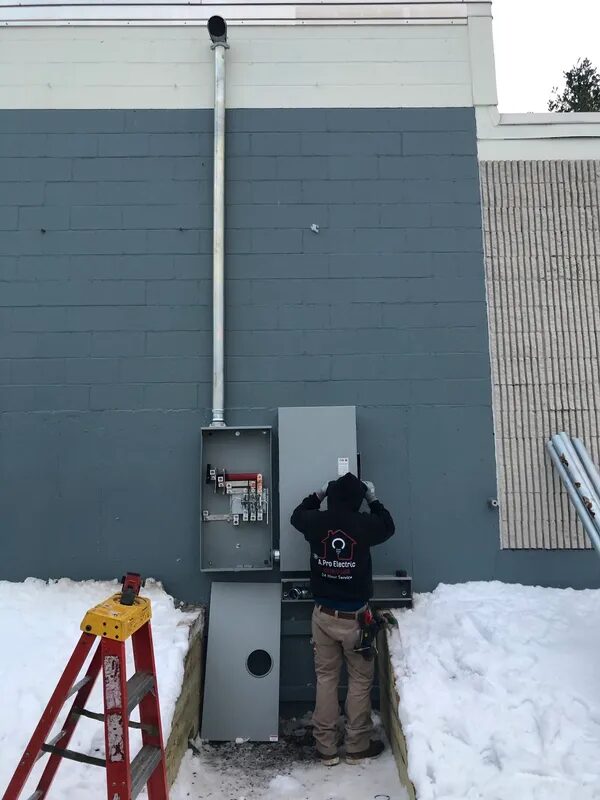
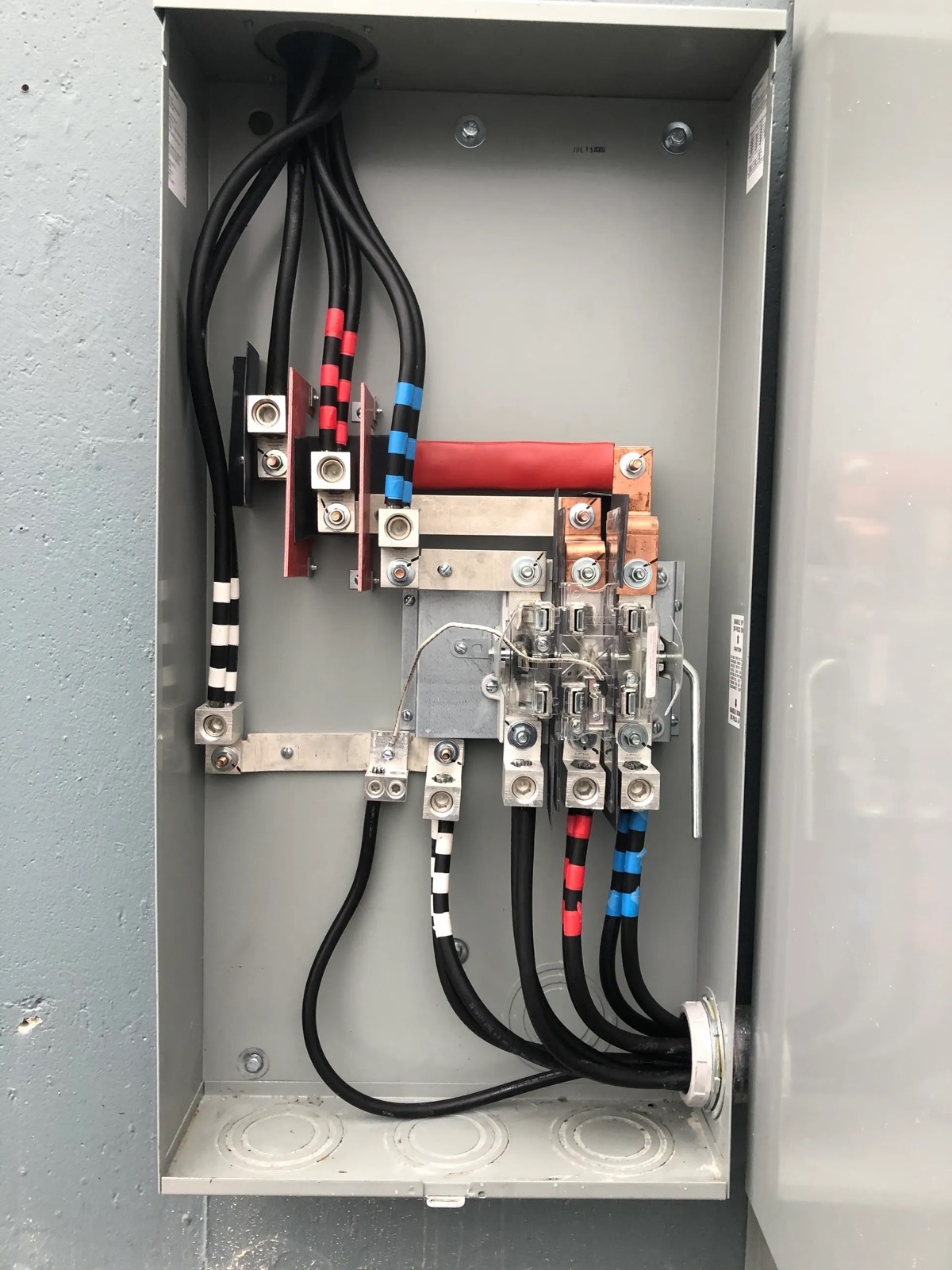
Panel work is the job behind most other jobs. A heat pump, an EV charger, an electric range or a finished basement all draw from the same panel, and when that panel is full, old or undersized, the answer to every one of those projects is the same one. Electrical panel replacement swaps the box and the breakers on the existing service size. A 200 amp service upgrade goes further and replaces the service entrance and the meter socket as well, and it typically runs $3,000 to $3,500.
Federal Pacific, Zinsco and Challenger panels are replaced rather than repaired, and a fuse box is converted to breakers. After a storm, a damaged mast or service entrance is repaired as part of the same work. Sub-panels and feeders for garages, workshops, basements and additions belong here too, because most of them begin with a question about whether the main panel can supply them at all.
A load calculation comes before any of it, because the honest answer is sometimes that the existing service is enough and should be left alone. The free panel safety check is a quick first look, and the guide on how to tell if a panel needs replacing explains what age, brand, capacity and condition each say about the box on your wall. Where a house is heading toward an electric vehicle or a heat pump, the guide to what size electrical service a house needs shows how the numbers work.
Home Rewiring in NH, From Knob and Tube Removal to Whole-House Rewires
Wiring problems announce themselves slowly. Two-prong outlets, breakers that trip in the same room again and again, lights that flicker when the dryer starts, a cloth-covered cable behind a switch plate. The older New Hampshire housing stock still carries knob and tube and cloth-covered cable, and houses built between 1965 and 1973 may have aluminum branch wiring, which needs its own remediation methods rather than a straight swap.
A whole-house rewire is the largest job on this list and it is rarely done all at once. A 2,000 square foot house typically runs $18,000 to $20,000, and most of that figure is access rather than wire, which is why staging the work room by room is often the sensible way through. Old wiring is removed as the new goes in instead of being buried behind it. Smaller jobs sit under the same heading, including added circuits for a kitchen, an office or a workshop, switch and outlet replacement, and GFCI and AFCI protection wherever it is now missing.
Recessed, Kitchen, Exterior and Security Lighting Installation in NH
Good lighting is mostly layout. One fixture in the middle of a ceiling doing all the work is the most common complaint, followed by shadows across the kitchen counter and dimmers that buzz. Recessed lighting is laid out for the room rather than on a grid, kitchen and under-cabinet lighting is planned at rough-in while the walls are open, and exterior and landscape lighting is rated for the weather it will actually face through a New Hampshire winter.
Security and motion lighting matters more than people expect on a long rural driveway, where a light in the right place changes how a house feels after dark. Ceiling fans need boxes rated to carry their weight, and dimmers and smart switches have to match the fixtures or the whole system hums and drops out at the low end. LED retrofits can be done through the whole house or room by room, and switched outlets are a quiet way to get a lamp onto a wall switch without new ceiling wiring.
The page on residential lighting installation lists everything the work covers. If you are planning a room from scratch, the guide to lighting a room properly explains the three layers that most good rooms use and where the controls belong.
EV Charger Installation in NH for Homes, Level 2 With the Service Checked First
An EV charger is a high continuous load, and the question that decides the job is whether the house can carry it. A load calculation comes before anything is ordered. Then a dedicated circuit is sized to the charger rather than to the nearest breaker. Where the calculation genuinely calls for it, the service is upgraded, and where it does not, load management can share the capacity the house already has instead of paying to upsize it.
Charging at home is the whole point for the long commutes around Derry, Salem, Bedford, Nashua, Manchester and Concord, and the details change with the house. A detached garage needs a feeder and sometimes a buried run. A household with two cars needs a plan for the second one. A hardwired charger and a 240 volt outlet for a plug-in unit are different installations with different costs, and the choice depends on the car and on how long it sits.
Standby Generator Installation in NH, Transfer Switches and Portable Generator Inlets
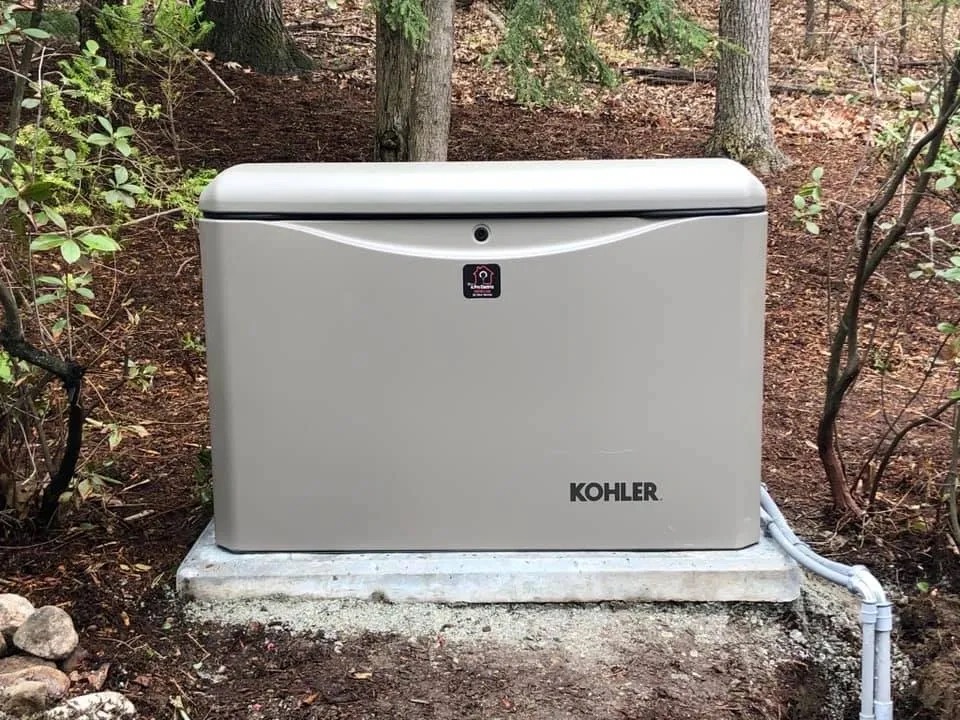
A generator is a decision about what stays on. In a house with a private well, a septic pump, oil or propane heat that needs electricity for the burner, or a rural line where restoration comes last, an outage is more than an inconvenience. A portable generator with a proper inlet and interlock suits a household happy to start a machine by hand, and the hookup typically costs about $650. A standby unit starts itself, and installed it typically runs $10,000 to $20,000.
The transfer switch is the installation. It stops generator power from feeding back into the utility line, which protects the people working on that line, and it decides which circuits the generator carries. A critical-loads panel lets a smaller unit cover what matters, and sizing comes from the connected load rather than the floor area of the house.
Electrical Remodeling and Home Addition Wiring in NH, Kitchens, Baths and Basements
Remodel electrical has two moments. The first is rough-in, when the walls are open and every circuit, box and switch position has to be right. The second is trim-out, when fixtures and devices go on. The decisions that cause trouble are the ones made late, such as the appliance schedule, gas or induction, where the island sits and whether the floor is heated. Settling them before rough-in costs far less than moving wires behind finished drywall.
A finished basement often needs a sub-panel, and an addition needs a clean join to the existing installation. An in-law apartment or ADU needs its own circuits and a load calculation based on what the house will become, not what it is today. If the house still has knob and tube or cloth-covered cable, a remodel is usually the right moment to deal with it, because the walls are already open.
Hot Tub, Well Pump, Range, Dryer and Heat Pump Electrical Circuits in NH
Some of the most important circuits in a New Hampshire house serve a single machine. A well pump is the water supply and a septic pump keeps the system working. A hot tub needs GFCI protection, bonding and a compliant disconnect. A range or dryer circuit has to be sized from the nameplate and not from habit. Heat pump and mini-split feeds are increasingly common, and each one needs its own local disconnect.
The common warning is a breaker that trips whenever one particular appliance starts, or lights that dim when the well pump or compressor kicks in. Both point to a circuit that was sized for something else. Workshop and garage sub-panels, pool wiring, and circuits for dishwashers, disposals and microwaves sit under the same heading, along with the control side of a pump system that is so often forgotten until it fails.
Home Electrical Safety Inspection in NH, Pre-Purchase Checks and Code Corrections
An electrical safety inspection answers a simple question about a house, which is whether it is safe and what it would take to make it so. It covers the condition, brand, service size and spare capacity of the panel, terminations checked for heat, grounding and bonding against current requirements, GFCI and AFCI protection where it is now required, and a look through the attic, basement and service entrance. Knob and tube, cloth-covered cable and aluminum wiring are identified, not guessed at.
People call for three reasons. A buyer's general inspection raised something, a seller wants to deal with it before it is found, or an insurer has asked about the wiring or the panel. Pre-purchase reports are written to be read by somebody who is not an electrician, so they say what is wrong, how serious it is and what putting it right involves. Whole-home surge protection and hardwired smoke and carbon monoxide detectors belong here too.
24 Hour Emergency Electrician in NH for Power Loss, Burning Smells and Storm Damage
Some electrical problems cannot wait for a weekday. A burning smell, a scorched outlet or panel, a breaker that will not reset, water reaching electrical equipment, a mast torn loose by an ice storm, a shock from an appliance or a faucet, or a total loss of power when the neighbors still have theirs. The first job in every case is to make the situation safe and isolate the problem, and the proper repair follows from that.
Anything on the utility's side of the meter belongs to the utility, so part of an emergency visit is working out which side of the line the fault is on and coordinating accordingly. Temporary arrangements can bridge a gap while a permanent repair is arranged. If anything at your panel is hot, scorched or humming, stay away from it and call.
Commercial Electrician and Electrical Contractor Services in New Hampshire
Commercial buyers search by what the building has to do, so these twelve services are organized the same way, from the tenant fit-up that opens a restaurant to the maintenance contract that keeps it open. A. Pro Electric is also licensed in Massachusetts, which is why commercial work reaches over the border into the Merrimack Valley.
Tenant Electrical Fit-Ups and Build-Outs in NH for Restaurants, Retail and Offices
A lease gets signed, and then somebody has to find out what the space can actually power. A fit-up starts with a survey of the existing supply, the panel and whatever the last tenant left behind. Next comes a load calculation against the new tenant's real equipment schedule, then a sub-panel, feeder and circuit schedule for the unit. A restaurant moving into a former retail space is the classic case, because the kitchen load, the hood interlocks and sometimes three-phase service were never part of the original build.
From there the work runs from rough-in to final trim. It includes branch circuits, floor boxes, lighting, emergency and exit lighting, kitchen equipment connections, and coordination with the data and low voltage trades. A shell handed over by a landlord is the other regular situation, where nobody has priced the electrical until the keys change hands and the opening date is already fixed.
Commercial Electrical Service Upgrades in NH, Three-Phase Power and Switchgear
Distribution is the part of a building that nobody looks at until a new tenant or a new machine will not fit on it. The warning signs are a main panel that is full with nowhere to add a circuit, breakers that are no longer manufactured, gear that is warm, discolored or humming, and nobody being able to say what actually feeds what. The work starts with a load assessment against measured demand rather than the original design.
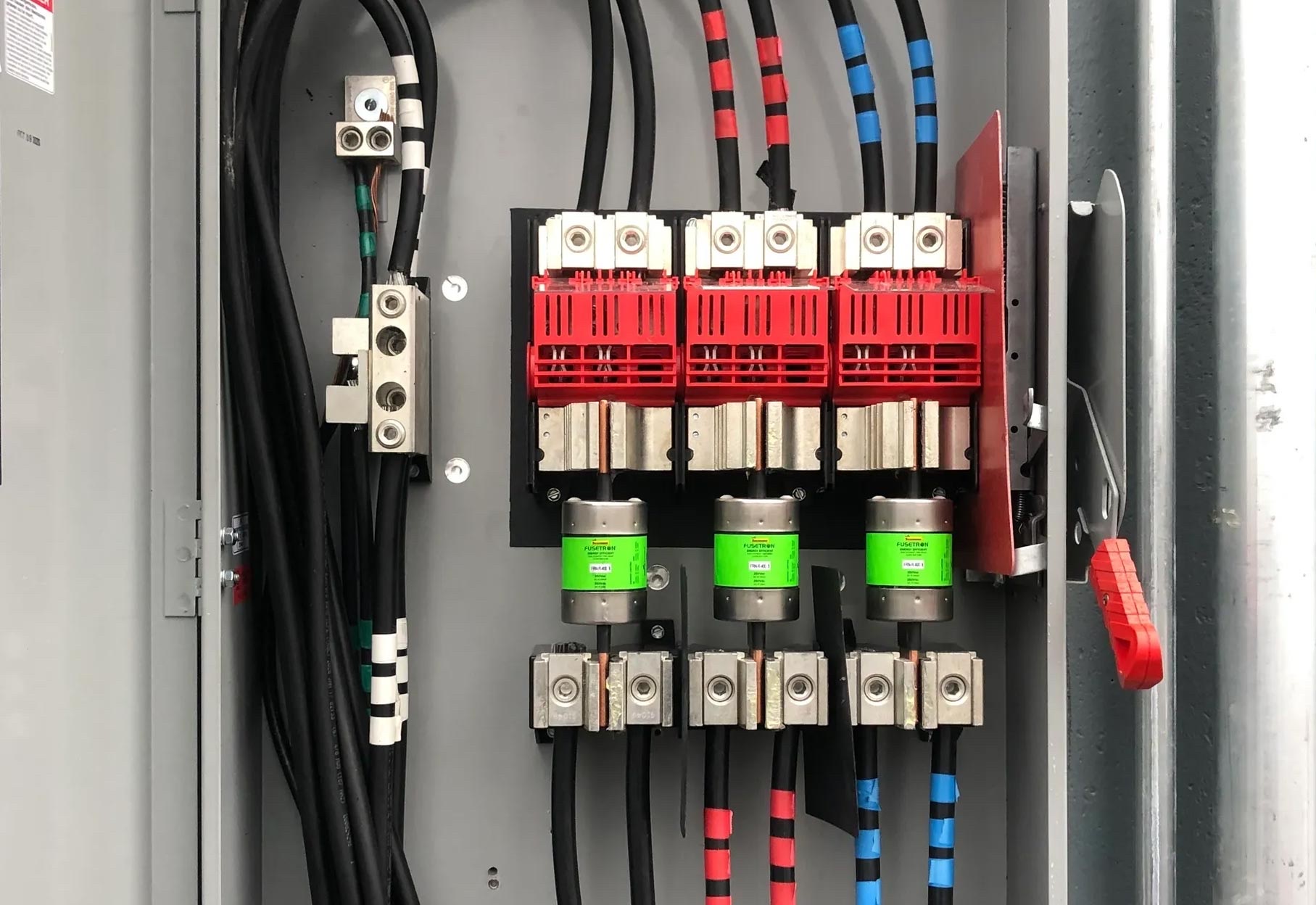
From there it covers new and upgraded services, single and three phase, service entrance and metering coordinated with the utility, switchgear and panelboards, dry-type transformers for indoor spaces, and feeders to tenant units, kitchens and production areas. Replacing obsolete distribution gear is planned around the building staying in use, which usually means doing the changeover in a short, agreed window.
Commercial Electrical Wiring in NH for New Builds and Older Converted Buildings
Commercial wiring is conduit and raceway work done to suit the room it is in. EMT, rigid conduit and MC cable each have their place. Wet, damp and corrosive locations need rated fittings, and floor boxes, poke-throughs and workstation power have to be where people actually sit. Servers, point-of-sale systems and other sensitive equipment get dedicated circuits instead of sharing one with the coffee machine.
The usual calls are extension leads running across floors, a breaker that trips whenever one machine starts, equipment that resets for no obvious reason, and a panel schedule that no longer matches what is on the circuits. Rewiring sections of older and converted buildings is a regular part of the work, including the mill buildings in the older cities, where the original distribution was designed for a different use entirely.
Commercial Lighting Installation in NH, LED Retrofits, High-Bay and Parking Lots
Commercial lighting pays for itself differently from home lighting. An LED retrofit of fluorescent, metal halide or high-pressure sodium fixtures cuts energy use and removes the relamping that somebody is quietly doing every few months, and the payback depends on the hours the lights actually run. Warehouse and industrial high-bay is laid out so the aisles are lit, not just the open floor. Retail needs ambient, accent and display lighting, and restaurants need rated fixtures in the kitchen.
Offices need glare control and zoning, parking lots and site lighting need underground power and poles done properly, and emergency and exit lighting needs to be tested and recorded. Occupancy sensing and controls close out most jobs, and they are often where the savings are decided.
Low Voltage Wiring in NH, Structured Data Cabling, Access Control and Cameras
A. Pro Electric does a lot of low voltage work, and it tends to be the cabling that has gone wrong gradually. It was patched in piecemeal with no patch panel or record, draped over the ceiling grid, or left as abandoned bundles that nobody can identify. Structured data cabling goes in properly terminated and tested, wireless access points are positioned for the coverage they have to give, and fiber is run between distribution points where copper distances do not work.
Access control cabling, locks and readers, camera and surveillance cabling with a sensible recorder location, and intercom and door entry systems all sit under the same heading. So do cable tray, conduit and pathways that leave room for the systems still to come. Keys that have been copied for years are a common reason a business starts thinking about access control, and wireless coverage that drops out in parts of a building is the usual reason for a cabling review.
Electrical Maintenance Contracts in NH for Commercial Buildings and Facilities
A maintenance contract is the quiet alternative to the emergency call. A scheduled visit checks panels, distribution and terminations under load with temperature readings, inspects gear, enclosures and clearances, confirms terminations are to the manufacturer's torque specification, tests breaker condition and operation, and function-tests emergency and exit lighting with duration records. A standby generator is exercised, serviced and load tested, and panel schedules and labeling are brought back up to date.
The result is a written report with the findings ranked by priority, so a manager can see what is urgent, what can be planned and what is fine. The businesses that benefit most are the ones that have had more than one emergency call-out in a couple of years, run a panel that feels warm, have emergency lighting that has never been tested, or own a generator that has never been load tested.
24 Hour Commercial Emergency Electrician in NH for Downtime, Outages and Lost Phases
For a business, an electrical failure is a revenue problem measured by the hour. A call about a building that has lost power starts with working out whether the fault is in the building or in the utility supply. A lost phase on a three-phase service is treated carefully, because running equipment on two phases can damage it. Refrigeration and other time-critical loads are restored first.
Burning smells, heat or arcing at panels and gear, water into panels and fixtures, and storm damage to service masts and entrances are all emergency work. The first job each time is to make the building safe and isolate the fault, and temporary power can bridge the gap while a proper repair is arranged. Anything on the utility side of the meter is coordinated with the utility rather than guessed at.
Property Management Electrical Services in NH for Landlords and Apartment Buildings
Property managers deal with electrical problems at volume, which makes the pattern more important than any single call. A. Pro Electric already works with several large property management companies. The regular work is turnover inspections and repairs between tenancies, smoke and carbon monoxide alarm compliance, common area, stairwell and parking lot lighting, emergency and exit lighting testing with records, and house panels and sub-metering.
Reactive tenant call-outs come back with a clear report of what was found, so a repeat call to the same unit or the same circuit becomes visible instead of being a surprise. Older multi-family buildings throw up their own problems, such as one meter serving several units with an informal split, a receptacle in one unit fed from another unit's panel, and Federal Pacific, Zinsco or fuse panels still in service. Separating units that share circuits is part of the work.
Machinery, Motor and Commercial Kitchen Equipment Electrical Hookups in NH
New equipment arrives with a nameplate, and the connection has to be designed from it. The circuit is sized from the nameplate. Three-phase motor connections are made with rotation confirmed, the disconnecting means goes within sight of the equipment, and motor overload and short-circuit protection are coordinated so the machine is protected without nuisance tripping. Starters, contactors, control transformers and interlocks are part of the same job.
Commercial kitchen equipment brings hood interlocks and shunt trip connections, and rooftop units, chillers, compressors and pumps each have their own requirements. The warning signs are machinery on order when nobody has checked the supply, a machine that trips its protection every time it starts, equipment that runs backward after a move, and lights that dip whenever something large starts. Dedicated process circuits are designed the same way.
Commercial Generator Installation in NH, Transfer Switches and Emergency Power
A commercial generator is sized from connected load and motor starting characteristics, not from square footage, and it is justified by what an outage costs. Stock that spoils, a production batch that is lost, a server room that cannot go down, emergency lighting and life safety systems that are a code obligation, or a site that has lost supply more than once in recent winters. Automatic and manual transfer switches, emergency panels carrying only the loads that matter, and load shedding with start sequencing allow a smaller unit to do the job.
Natural gas, propane and diesel installations each have their own pad, clearance, exhaust and cold-weather requirements. A generator that tested fine in September can still fail in January if the cold was not planned for, which is why the work includes the provisions for cold starts and not only the unit itself.
Commercial EV Charger Installation in NH for Workplaces, Fleets and Multi-Port Sites
Commercial EV charging is a design problem about capacity and dwell time, not a count of units. The site assessment checks capacity against existing demand, the array is designed around the vehicles and how long they sit, and load management shares capacity instead of exceeding it. Sub-panels, feeders and distribution are sized for the full eventual array, so the second phase does not mean a new service. Trenching goes below the frost line, or surface conduit is used where that is more appropriate.
Employees asking about charging, fleet vehicles being replaced, and a parking lot due for resurfacing are the common triggers, and the resurfacing is the cheap moment to put conduit in. Hotels, restaurants and retail sites where customers stay for a while have their own case, because the charger becomes a reason to choose the site.
New Construction Electrical in NH, Electrical Subcontractor for General Contractors
New commercial construction is a sequence, and the electrical has to be in the right place in it. Temporary construction power is sized for the trades and for the winter heat. The utility application starts at the beginning of the program because the lead times are long. The service, switchgear and distribution are ordered early against those lead times, and underground and in-slab work goes in ahead of the pour.
Rough-in is coordinated with mechanical and plumbing, and lighting, controls, devices, fixtures and equipment connections follow as items are delivered. Subcontracting to general contractors is regular work here, and a welcome one. A general contractor who needs an electrical subcontractor licensed in New Hampshire, and in Massachusetts for work across the border, can start with the page on new construction and GC electrical work.
Electrical Problems in New Hampshire and the Electrical Service That Fixes Them
People rarely call knowing the name of the service. They call because something is happening, so this matches the common situations to the work that fixes them.
Home Electrical Problems in NH and the Service That Fixes Them
A breaker keeps tripping, or will not reset
The breaker is doing its job, which means the circuit is overloaded, faulted or worn out. Resetting it over and over is the one thing not to do. A tripping breaker is usually a wiring or panel question.
How Hiring an Electrician Works in New Hampshire, From First Call to Inspection
The same five steps sit behind almost every job, whether it is one circuit or a whole building.
1
The First Call With an Electrician Sets the Scope of the Job
A phone call or the quote form describes what you can see and what you are planning. The age of the house or building, the size of the panel and what is being added all matter, and where a job has to be seen before it can be scoped, it is seen.
2
Electrical Load Calculation Comes Before Anything Is Ordered
A load calculation establishes what the service and the panel can actually carry. It is the step that stops an EV charger, a heat pump or a new tenant from arriving at a service that cannot support it, and it is why a job sometimes shrinks.
3
The Electrical Permit Goes in Under a Master Electrician License
Where the work needs a permit, it is pulled under license 14569M, the top tier and the only one a permit can be pulled under. You should not have to arrange your own electrical permit.
4
The Work Follows the National Electrical Code and Old Wiring Comes Out
The work follows the National Electrical Code as New Hampshire adopts it. Old wiring is removed as the new goes in rather than being buried behind it, and anything that has to stay is labeled so the next electrician can read it.
5
Town Electrical Inspection Signs Off and the Job Closes
The inspection is scheduled with your town as part of the job. The building department signs off on the finished work, and that sign-off is the point at which the job is actually closed.
Licensed Master Electrician in New Hampshire, and Why the License Matters
New Hampshire has three license tiers for electrical work, and master electrician is the top one. It is also the only tier a permit can be pulled under, so it matters more than the title suggests. When a job needs a permit, the license on that permit is the one that answers for the work, and a contractor without it cannot pull the permit themselves.
A. Pro Electric holds New Hampshire master electrician license 14569M, and the number goes on the paperwork for every job that needs a permit. You can check any electrician's number against the state license lookup before you hire them, and it is worth doing, because the number is public and the check takes a minute.
For commercial work the license also reaches across the border, since A. Pro Electric is separately licensed in Massachusetts. Insurance includes a $2 million umbrella policy, and a certificate goes to whoever needs one before work starts, which matters to property managers and general contractors who have to verify it first.
Electrician Cost in New Hampshire and What Moves the Price of Electrical Work
Electrical prices depend on the house or building more than on the job title, so most work is quoted after the details are known. Four figures are firm enough to give. A 200 amp service upgrade typically runs $3,000 to $3,500. A whole-house rewire of a 2,000 square foot house typically runs $18,000 to $20,000. A portable generator hookup is about $650, and an installed standby generator typically runs $10,000 to $20,000.
What moves the number is mostly access and capacity. A rewire is dominated by how much of a finished house has to be opened up and made good afterward. A service upgrade depends on the run from the meter, whether the mast and meter socket are being replaced and what the utility needs on its side. An EV charger depends on whether the service has room for it, and a commercial fit-up depends on what the space was before and what the equipment schedule demands.
Two free tools help before anybody visits. The service capacity calculator shows whether a 100, 150 or 200 amp service has room for a new load, and the panel brand check flags the panels that are worth replacing regardless of the job.
Electrician Service Area in New Hampshire and Massachusetts, Town by Town
Henniker is home, with Hillsborough, Weare, Deering, Antrim, Bradford and Warner next door. The everyday work runs through Concord and Hopkinton, Manchester, Bedford, Nashua, Derry, Salem, Laconia and Keene, and the towns around each of those, and commercial work reaches the Seacoast and the Merrimack Valley across the Massachusetts line. Nothing is treated as too small to call about, and the towns listed are worked regularly rather than treated as a boundary.
The electrical service area page sets out all six markets, the cities in each and the towns around them. If you are further out than the list, call and ask instead of guessing from a map.
Free Electrical Calculators and Tools for New Hampshire Homes and Businesses
Electrical Guides for New Hampshire Homes and Businesses
The guides go deeper than a service page, written for the person paying rather than for another electrician. Four to start with, and the full sets are linked below.
What Electrical Services Do You Offer in New Hampshire?
Twenty-one kinds of work in two groups. For homes there are panel and service upgrades, rewiring, lighting, EV chargers, generators, remodel electrical, appliance and specialty circuits, safety inspections and 24 hour emergency repairs. For businesses there are tenant fit-ups, service and switchgear, commercial wiring and lighting, low voltage, maintenance contracts, emergency response, property management work, equipment connections, generators, EV charging and new construction.
Do You Work as Both a Residential and Commercial Electrician in NH?
Yes. They are organized separately because a homeowner with a dead outlet and a property manager with a building are different readers with different problems, but the same licensed electricians do both kinds of work.
Is My Electrical Job Too Small to Call an Electrician About?
No. Nothing is too small to call about, and a short conversation will tell you whether it needs a visit, a permit or neither. If you are further out than the towns on the service area page, call and ask rather than guessing.
Is There a 24 Hour Emergency Electrician in NH, Including Nights and Weekends?
Yes, around the clock, for homes and for businesses. The first job is always to make the situation safe and isolate the fault, and the proper repair follows. If a panel is hot, scorched or humming, stay away from it and call.
Do I Need a Permit for Electrical Work in New Hampshire?
It depends on the work and on the town, and working that out is part of scoping the job. When a permit is needed it goes in under a master electrician license, and the inspection is scheduled with your town as part of the work.
How Do I Check an Electrician's License in New Hampshire?
Ask for the license number and look it up in the state license lookup. A. Pro Electric holds New Hampshire master electrician license 14569M, the top tier and the only one a permit can be pulled under.
How Much Does It Cost to Upgrade an Electrical Panel in New Hampshire?
A 200 amp service upgrade typically runs $3,000 to $3,500. The variables are the run from the meter, whether the mast and meter socket are being replaced, and what the utility needs on its side. It is worth establishing first whether the upgrade is needed at all.
Which New Hampshire Cities and Towns Do You Serve as an Electrician?
Henniker is home, with the towns around it, and the regular work covers Concord, Manchester, Bedford, Nashua, Derry, Salem, Laconia, Keene and the towns around each. Commercial work reaches the Seacoast and northern Massachusetts. The service area page lists them market by market.
Do You Work as an Electrician in Massachusetts as Well as New Hampshire?
Commercial work, yes. A. Pro Electric is separately licensed in Massachusetts, which is why commercial services extend over the border into the Merrimack Valley. Residential work is in New Hampshire.
Is Your Electrical Company Insured, and Can I Get a Certificate?
Yes, including a $2 million umbrella policy. A certificate goes to whoever needs one before work starts.
Can a New Hampshire Business Get a Scheduled Electrical Maintenance Contract?
Yes. A scheduled visit checks panels and distribution under load, tests emergency lighting and generators, and ends with a written report ranked by priority. It suits buildings that have had repeat call-outs or equipment that has never been tested.
What Should I Have Ready When I Call an Electrician About a Job?
A rough idea of what you are planning, the age of the house or building, and a photograph of the panel and its label if you can take one. For a business, the equipment list or lease details help. None of it is required, and the conversation works without it.