

Commercial EV Charger Repair and Maintenance in New Hampshire
For sites that already have chargers. Faults diagnosed properly, connectors replaced before they fail, and a schedule that keeps units earning rather than sitting dead.
Keeping Commercial EV Chargers Working in New Hampshire
Why Commercial Chargers Fail
Commercial EV chargers fail in a small number of predictable ways, and almost none of them is the charger itself deciding to stop.
Connectors and cables account for most of it. A public or tenant-facing unit is handled several times a day by people with no reason to be gentle, in weather, with road salt on everything. Pins wear, latches break, cables are driven over and strain reliefs give up. It is the most exposed component and it is a consumable rather than a permanent part.
Communications are second. A unit that has lost its network connection stops taking payment, stops authenticating users and frequently stops charging, while appearing perfectly healthy. Sites report this as a charger fault and it is usually a router, a SIM, a firmware state or a credential that expired.
Electrical faults are third and the least common, but the most consequential: a GFCI protection device tripping repeatedly, a termination that has loosened under years of thermal cycling, or an upstream problem in the distribution feeding the units. Those are the ones where the charger is telling the truth.
Worth separating from all three is the fault that is not a fault, which is a driver reporting slow charging in February. A cold battery accepts charge more slowly and the car spends part of the session warming its pack, so the same unit on the same circuit delivers less than it did in July. Sites that do not know this raise tickets every winter for equipment that is working exactly as designed, and a line in the site information saves everybody the visit.
Diagnosing a Fault Rather Than Replacing a Unit
The expensive mistake on a failed charger is replacing it before establishing what actually failed, and it happens because a replacement is easier to quote than a diagnosis.
The sequence that works starts furthest from the charger. Is the circuit live and is the breaker holding. Is the unit communicating. What does its own log say, which on a networked unit is frequently a precise answer nobody has looked at. Only then does the unit itself come apart.
That order matters because the most common findings are all upstream. A tripped protective device, a failed communications path or a supply problem presents identically to a dead charger from the bay, and all three are cheaper to fix than the unit.
Where the unit genuinely has failed, the question becomes parts availability and whether a component is replaceable. Connectors, cables and some modules are; on older units past support, sometimes nothing is, and that is the honest moment to discuss replacement rather than the first moment.
Age is also where the conversation changes shape. A unit five years old with a replaceable connector is worth repairing every time; one ten years old, out of support, on a network the manufacturer has retired, is usually not, however well it has worked. Knowing which category a site’s units fall into before something fails is more useful than finding out during an outage, and it is one of the things a first inspection establishes.
Connectors and Cables, the Consumables
Treating connectors as consumables rather than as permanent parts changes how a site is maintained and how much downtime it has.
The wear is visible before it becomes a fault. Pins discolor, latches loosen, insulation at the strain relief cracks, and the cable develops a permanent set where it has been driven over. All of that is apparent on an inspection months before the unit stops working, and replacing a connector on a planned visit costs a fraction of an emergency call-out plus the downtime around it.
Salt accelerates everything in this climate. A connector on an outdoor unit through a New Hampshire winter collects brine from every vehicle that plugs in, and corrosion at the pins raises resistance exactly where the current is highest.
Holsters matter more than they look. A connector returned to a holster stays out of standing water and off the deck; one left hanging sits in whatever the weather is doing. Sites without holsters replace connectors considerably more often, which makes fitting them the cheapest maintenance decision available.
Cable management is the same argument at the other end. A lead that reaches the ground and gets driven over is damaged in a way that is invisible until the conductor inside gives up, and retractors or overhead management cost less than two replacement cables. On a site where vans and forklifts move around the bays, it is not optional so much as deferred.
Uptime, and What a Dead Charger Actually Costs
The cost of a failed charger depends entirely on what the site uses it for, and that should shape the maintenance arrangement rather than a standard package.
On a fleet depot a dead charger is a vehicle that cannot run its route, which is the most expensive version and the reason depots are better served by one more charging position than they strictly need.
On a retail or hospitality site it is a customer who came for the amenity and found it broken, which costs goodwill rather than money and is hard to measure and easy to underestimate.
On a residential building it is a resident who chose the building partly for the charging, and a unit out of service for three weeks does real damage to that relationship. That is why response time belongs in the arrangement rather than being left to good intentions.
Setting that response target honestly matters more than setting it low. A four hour target nobody can meet is worse than a next-business-day target that is always kept, because the first sets an expectation that gets broken and the second sets one that gets trusted. Sites with several chargers can also buy themselves time with redundancy: one position more than strictly needed absorbs a failure without anybody being stranded, and it costs less than the contingency it replaces.
What Scheduled Maintenance Actually Covers
A maintenance visit on a charging installation is mostly inspection and measurement, and the work that prevents faults is unglamorous.
Connectors and cables are examined for the wear described above and replaced on condition rather than on failure. Enclosures, seals and conduit entries are checked, because water getting in is the slow cause behind a large share of electrical faults on outdoor units.
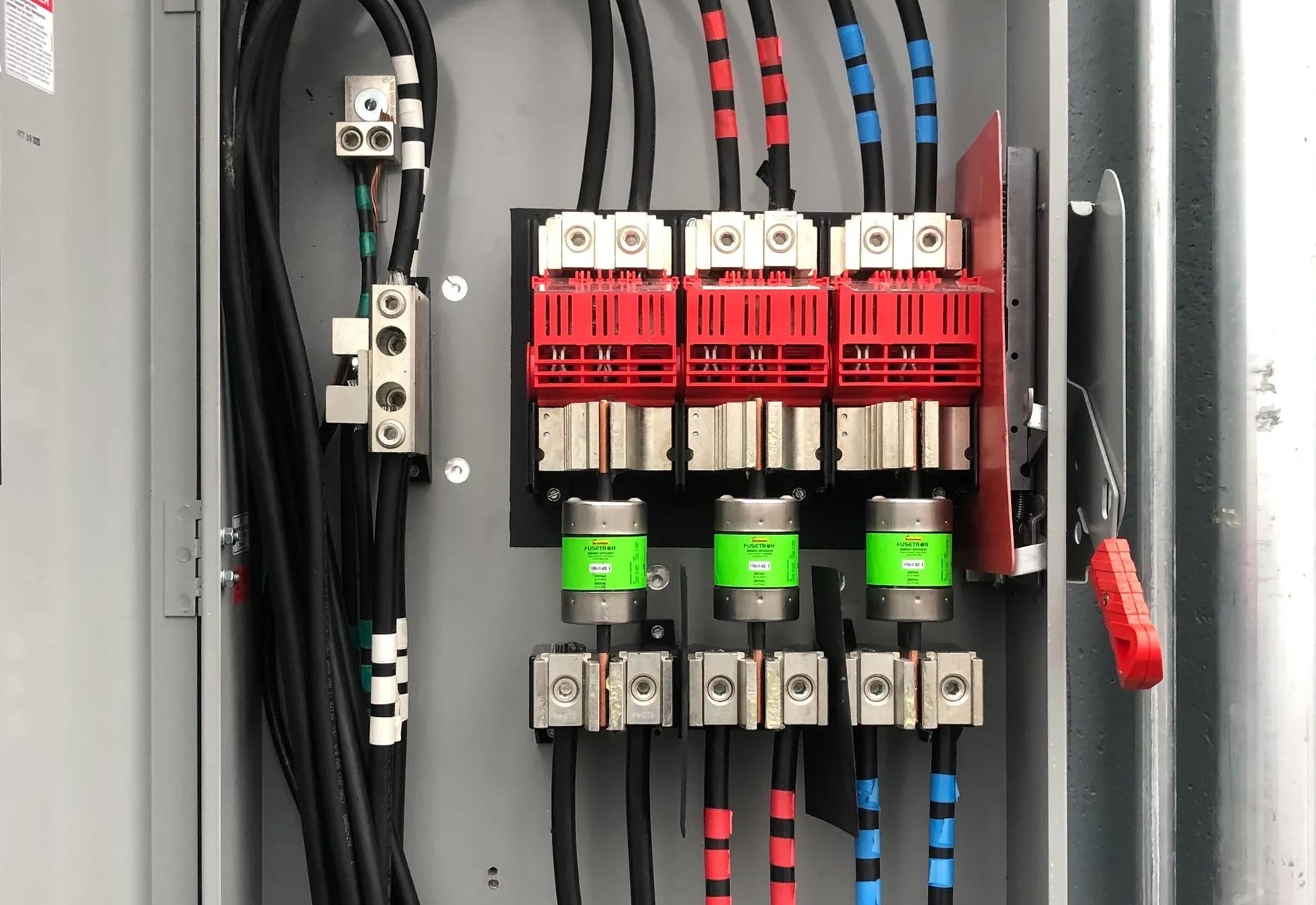
Terminations are the item that justifies the visit on its own. Connections carrying a continuous load through years of heating and cooling loosen, and a loose connection under that current runs hot. Checking and retightening to specification is quick and it prevents the failure mode that does real damage.
Protective devices are tested rather than assumed, communications and firmware are confirmed current, and the unit is exercised with a real vehicle or a load to prove it delivers rather than merely powers up.
That last step is what separates a maintenance visit from a walk-round. A unit that lights up, authenticates and reports healthy can still fail to deliver current, and the only way to know is to draw some. On a site where units are seldom used, which is more common than operators expect, that test is frequently the only time all year anybody finds out whether a charger actually works.
Networked Units, Monitoring and Finding Faults First
The advantage of networked chargers is that they report their own problems, and most sites never configure that properly.
A unit that stopped at midnight and raised an alert is a different problem from one discovered at eight by a driver who needed it. Setting alerts to reach somebody who will act, rather than an address nobody reads, is a ten minute job at commissioning that is routinely skipped.
Session data also shows degradation before failure. A unit delivering less than it used to, or ending sessions early, is telling you something about a connector or a termination well before it stops. Reviewing that periodically is part of a maintenance arrangement rather than an extra.
Where units are not networked, which is common on older installations, the substitute is a scheduled visit and a simple fault-reporting route for whoever is on site. It is less good and considerably better than nothing.
A sticker on the unit with a number to call is the unglamorous version of this and it works. Most faults on a public-facing charger are first noticed by a driver who has no idea who to tell, so they tell nobody and the unit stays broken. Giving them somewhere to report it turns every user into fault detection at no cost.
Inheriting an Installation Somebody Else Put In
Most of this work is on chargers we did not install, and the first visit is different from the ones that follow.
It starts with establishing what is actually there: the units and their firmware, the supply and protection feeding them, whether there is load management and whether it is working, and what the as-built arrangement is where documentation is missing, which it usually is.
That frequently turns up things worth knowing. Units configured to draw more than the circuit comfortably supports, load management installed and never enabled, protective devices of the wrong type, or a supply that was marginal on day one.
None of it is a reason for alarm and all of it is better known than not. The output of a first visit is a baseline: what is here, what condition it is in, what needs attention now and what will need it within a year.
Documentation is frequently the largest gap. Installations change hands with the building, contractors move on, and the site is left with equipment nobody has a record of. Rebuilding that record, what is installed, what it is fed from, what settings it holds and who the network account belongs to, is quiet work that makes every subsequent visit shorter and every fault quicker to resolve.
A Schedule Against Calling When It Breaks
The alternative to a maintenance arrangement is not saving money, it is paying for the same work at the worst moment with downtime attached.
A connector replaced on a planned visit is a part and half an hour. The same connector replaced after it fails is an emergency call-out, a unit out of service until somebody can attend, and on a fleet site a vehicle that did not run.
Sites with several chargers benefit most, because one visit covers all of them and the marginal cost per unit falls quickly. A site with eight chargers inspected annually is a morning; eight separate reactive call-outs across a year is a different figure entirely.
Austin wants recurring work of exactly this kind, so it is arranged as a standing schedule alongside whatever else the site needs. Scheduled maintenance covers the wider arrangement, emergency call-outs cover the times a plan does not hold, and the EV charging page covers new installations.
What EV Charger Maintenance Covers
- Connector and cable inspection, replaced on condition not on failure
- Enclosure, seal and conduit entry checks on outdoor units
- Terminations checked and retightened to specification
- Protective devices tested rather than assumed
- Communications, firmware and alerting confirmed working
- Session data reviewed for degradation before it becomes a fault
- Written record of findings, work done and what needs attention next
When to Call Us
- A charger has stopped and nobody knows why
- Units trip repeatedly and get reset rather than investigated
- Connectors are visibly worn or cables are damaged
- Chargers were installed by somebody else and never inspected since
- A failed charger would take a vehicle off the road
Commercial EV & Fleet Charging Questions, Answered
Do You Service Chargers You Did Not Install?
Yes, and most of this work is exactly that. The first visit takes longer because it establishes what is there and what condition it is in, and that becomes the baseline everything afterwards is measured against.
How Often Should Commercial Chargers Be Serviced?
Annually for most sites, and more often where units are heavily used or outdoors in a public setting. Connectors on a busy public unit wear far faster than on a workplace charger used twice a day.
Our Charger Keeps Tripping. Is That a Fault?
Usually it is reporting something real rather than misbehaving, and repeatedly resetting it is the wrong response. It can be a failing connector, moisture in an enclosure or a protective device that is the wrong type for the unit, and the three are distinguishable.
Can a Connector Be Replaced or Does the Unit Have to Go?
On most commercial units the connector and cable are replaceable, which is a fraction of the cost of the unit. Whether parts are still available is the question on older models, and that is worth knowing before something fails.
The Charger Has No Power. Where Do You Start?
Upstream. Whether the circuit is live, whether protection has operated, whether the unit is communicating and what its own log says. The most common findings are all before the charger, and replacing a unit without checking them is how sites pay twice.
Can You Cover Several Sites on One Arrangement?
Yes, and it is usually cheaper and easier to plan that way. One schedule, one record per site and one point of contact, which is how most of the property and portfolio work we do is arranged.
Guides on Commercial EV & Fleet Charging
More Commercial EV & Fleet Charging
Fleet EV Charging
Depot charging, where every vehicle draws on the same overnight window.
Apartment & Multi-Family EV Charging
Metering per resident, assigned or shared bays, and room to grow.
Condo & HOA EV Charging
Common property, cost allocation and getting a proposal past a board.
Parking Garage EV Charging
Containment through the structure, fire, drainage and phased capacity.
All commercial ev & fleet charging work, including what a full installation involves and what it costs.