

Electrical Safety Inspections in New Hampshire
Safety inspections, pre-purchase checks, code corrections, insurance-required repairs, surge protection and hardwired smoke and CO detectors, across Manchester, Concord, Nashua, Derry, Salem and the towns around them.
What an Electrical Safety Inspection Covers in a New Hampshire Home
What an Electrical Safety Inspection Checks
An electrical safety inspection establishes what is actually installed, what condition it is in, and what it would cost to put right. That last part is what separates it from a general home inspection and it is the part people actually need.
It starts at the panel, because that answers several questions at once: the brand, the service size, whether there are spare spaces, the condition of the terminations, and whether anything is running warm. Then the circuits, sampled through the house, checking grounding, polarity, GFCI and AFCI protection where current requirements call for it, and the condition of devices.
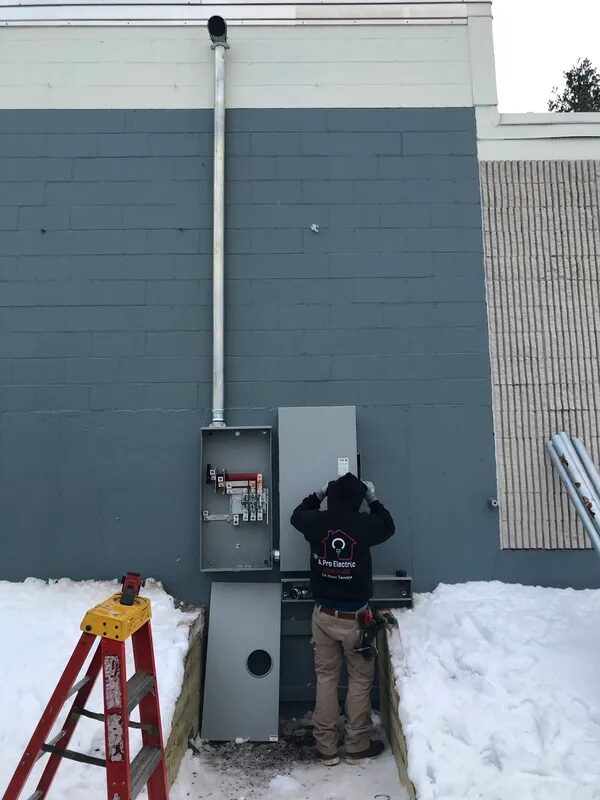
Then the parts nobody looks at. The basement and the attic show the actual wiring, which is where knob and tube, cloth-covered cable and aluminum branch wiring become visible, along with junctions made outside boxes. The service entrance outside shows the mast, the meter socket and the drop, all expensive if they need work and invisible if you do not look up.
We carry out inspections across Manchester, Concord, Nashua, Derry, Salem, Bedford, Henniker, Laconia and Keene, and the report is written so you can price and negotiate from it.
Pre-Purchase Inspections and Why They Differ
A general home inspector covers the electrical system visually, and that is genuinely useful. What it does not do is quantify, and quantifying is where the money is.
A report saying "knob and tube wiring observed in attic" does not tell you whether that is two circuits or the whole house, and the difference between those is tens of thousands of dollars. "Federal Pacific panel present" does not tell you whether the service is also undersized for what you intend to do with the house.
A targeted electrical inspection during the contingency period turns those observations into a scope with a number attached, which is the only thing that moves a price. "The wiring is old" is not a negotiating position; a written scope from a licensed electrician is.
It also protects against the opposite error, which is walking away from a good house over a finding that resolves into a day of work. Our guide to buying an older New Hampshire house covers what to look for before anybody is called.
What Insurers Ask About
Insurers are the most common reason an inspection gets booked, and what they ask about is a short and predictable list.
Knob and tube wiring is the big one. Carriers vary from refusing cover outright, to requiring replacement within a set period, to surcharging, to asking nothing at all. Federal Pacific and Zinsco panels come up nearly as often, and the panel identification tool will tell you which you have from the front of the panel. Fuse boxes, aluminum branch wiring and the absence of GFCI protection all appear on questionnaires.
It surfaces at predictable moments: buying, switching carrier, renewal when underwriting changes, or after a claim, which is the worst time to discover a policy had a condition nobody read.
Because the pressure usually arrives with a deadline attached, knowing where you stand before somebody else sets the timetable is worth a great deal. An inspection establishes what is present and how much of it, which is the information both an insurer and a buyer want.
Code Corrections and What Is Actually Required
Existing installation is generally not required to be retrospectively upgraded simply for being old, and that distinction saves people money.
What that means in practice is that anything installed as new work meets current requirements in full. Existing installation that is sound, safe and not being altered can generally remain. Where the line moves is where work touches it: extending a circuit brings that circuit into scope, changing the use of a space changes what is required in it, and anything genuinely unsafe is not grandfathered by age.
So an inspection report separates three things rather than producing one list. What is unsafe and needs doing. What is not compliant with current requirements but is permitted to remain. And what is simply worth doing because the house would be better for it.
Conflating those three is how homeowners end up paying for work nobody required, and separating them is most of the value of a written report.
Surge Protection at the Panel
Whole-home surge protection installs at the panel and clamps the voltage spikes that come in on the service, and in a state with this much storm activity it is one of the better value items on this page.
What it protects is everything with a circuit board in it, which in a modern house is most things: heat pump controls, the furnace board, appliances, the well pump controller, network equipment and anything charging. Those are the things that fail after a storm without anybody connecting the two events.
It is not a substitute for point-of-use protection on sensitive equipment, and the two work together rather than instead of each other. A panel device handles what comes in on the service; a plug-in device handles what is generated inside the house.
It is a short job, it happens at the panel, and it is frequently done alongside other panel work where the cover is coming off anyway.
Smoke and Carbon Monoxide Detectors
Hardwired, interconnected smoke and carbon monoxide detectors are required in new work and in most substantial remodels, and they are one of the requirements most often missing in older New Hampshire houses.
Interconnection is the part that matters and the part people do not realize they are missing. A battery detector in a basement that sounds only in the basement is considerably less use at three in the morning than a hardwired set where every alarm in the house sounds together.
Carbon monoxide matters here specifically because so much of the housing stock burns something. Oil, propane and wood heat are all normal across New Hampshire, and an attached garage adds another source. Placement requirements exist for a reason and are worth getting right rather than guessing.
Where a house is being remodeled anyway, this is the cheapest moment to hardwire and interconnect, since the access is already there.
What a Written Report Gives You
A report that can be priced and negotiated from, which is a different document from a checklist with ticks on it.
What goes in it is what was inspected, what was found, what is unsafe against what is merely dated, what each item involves to put right, and what should be done first. Prioritised, because a list with no order is a list that does not get acted on.
For a purchase that becomes a negotiating position. For an insurer it becomes the answer to their questionnaire. For an owner staying put it becomes a plan that can be staged over a few years rather than faced all at once.
It is also the document that makes the next job cheaper, because an electrician arriving at a house that has already been surveyed starts with the work rather than with the investigation.
When an Inspection Is Worth Booking
Four moments, and outside those it is usually not urgent.
Buying, during the contingency period while findings are still a negotiating point rather than your problem. Selling, because it is better to have dealt with something than to have it found. When an insurer raises it, since the deadline is theirs and the information is what answers them. And when something has changed, whether that is a breaker tripping more often, a smell noticed once, or a panel nobody has opened in twenty years.
The one that catches people out is the slow change, because the signals are boring rather than dramatic. A warm outlet, lights dimming when the well pump starts, a faint smell that did not come back. Each is cheap to investigate and each is what an emergency callout was before it became one.
Where the house has old wiring and no immediate deadline, an inspection is what turns an unknown into a staged plan, and staged work is the difference between a job that happens and one postponed indefinitely.
What an Inspection Covers
- Panel condition, brand, service size and spare capacity
- Terminations checked for heat and correct torque
- Grounding and bonding against current requirements
- GFCI and AFCI protection where it is now required
- Sampled circuit testing for grounding and polarity
- Attic, basement and service entrance inspection
- Knob and tube, cloth-covered cable and aluminum wiring identified
- Pre-purchase reports written to be negotiated with
- Code corrections and insurance-required repairs
- Whole-home surge protection and hardwired interconnected detectors
Reasons to Book an Inspection
- You are buying and the general inspection raised something
- You are selling and want to deal with it before it is found
- An insurer has asked about the wiring or the panel
- The house was built before 1950, or between 1965 and 1973
- There are two-prong outlets, or no GFCI in kitchens and baths
- A breaker has started tripping more often than it used to
- An outlet or switch plate is warm or discolored
- Nobody has opened the panel in twenty years
Safety, Inspections & Repairs Questions, Answered
How Long Does an Electrical Inspection Take?
Most houses are an hour to two depending on size and access, plus the time to write it up properly. The report is part of the job rather than an extra, because a verbal summary is not something you can price or negotiate from.
Is This the Same as a Town Inspection?
No. A town inspection signs off permitted work against code at the time it was done. This is an assessment of the whole installation as it exists now, including things that are permitted to remain but are worth knowing about.
Will You Find Everything?
Most of it, not all. An inspection covers what can be seen, tested and reached without opening walls. What is behind plaster stays behind plaster, and we will say where the limits of the inspection were rather than implying it was exhaustive.
Do I Need One Before Selling?
Not required, and frequently worth it. Findings dealt with in advance are cheaper than findings discovered during a buyer's inspection with a closing date attached, and knob and tube or a Federal Pacific panel is far better raised by you than by them.
Can You Do the Repairs You Find?
Yes, and you are under no obligation to use us for them. The report is written so any licensed electrician could price from it, which is deliberate, because a report you can only act on with one contractor is worth less.
What If the Report Finds a Lot?
It gets prioritised, which is the point of writing it properly. What is unsafe comes first, what is required by an insurer or a sale comes next, and what is merely dated can be staged over years. Very few houses need everything at once.
Guides on Safety, Inspections & Repairs
How to Tell If Your Electrical Panel Needs Replacing
The signs worth acting on, the panel brands insurers flag, and how to tell a full panel from an unsafe one.
Knob and Tube Wiring in New Hampshire
How to recognize it, why insurers ask about it, and what removing it actually involves.
Buying an Older New Hampshire House: What to Check Electrically
What a general home inspection misses, and the findings worth putting into a negotiation.
Other Residential Electrical Work
Electrical Panels & Service
Panel replacements, service upgrades, meter and mast work.
Wiring & Rewiring
Whole-house rewiring, knob and tube removal, added circuits.
Lighting
Recessed lighting, fixtures, exterior and landscape lighting.
EV Charger Installation
Level 2 chargers, 240 volt outlets, service capacity for an EV.
Generators & Backup Power
Transfer switches, standby generator wiring, portable inlets.
Remodels & Additions
Kitchens, bathrooms, basements, additions and new builds.
Appliance & Specialty Circuits
Hot tubs, well pumps, ranges, dryers and heat pump circuits.
24 Hour Emergency
Power loss, scorched panels, storm damage, repeat tripping.