

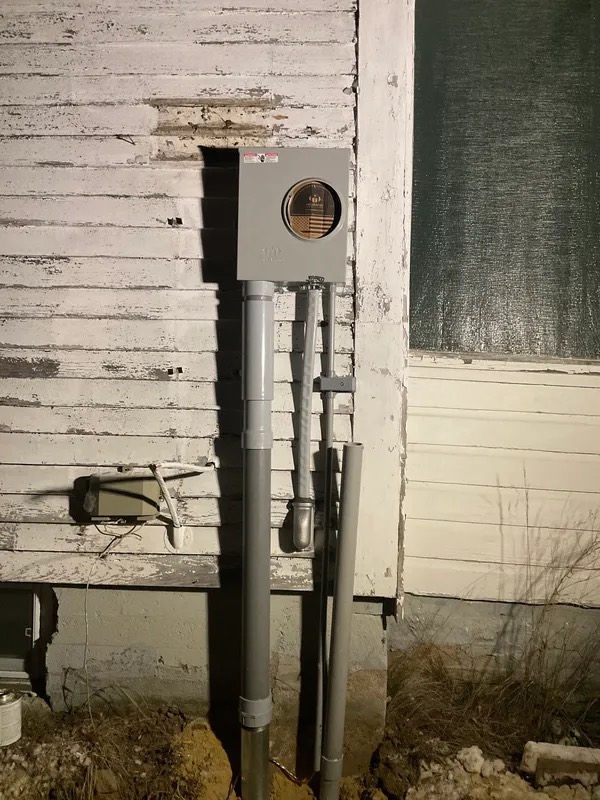
Residential Electrician in Southern and Central New Hampshire
Panel and service work, rewiring, lighting, EV chargers, generators, appliance circuits and emergency repairs, on houses across Henniker, Concord, Manchester, Bedford, Nashua, Derry, Salem, Laconia and Keene. New Hampshire master electrician, license 14569M, on the permit every time.
Home Electrical Services across Southern and Central New Hampshire
Nine areas of work. Each one has its own page with what the job involves, what tends to go wrong, and the questions homeowners ask most.
Electrical Panels & Service
Panel replacements, service upgrades, meter and mast work.
Wiring & Rewiring
Whole-house rewiring, knob and tube removal, added circuits.
Lighting
Recessed lighting, fixtures, exterior and landscape lighting.
EV Charger Installation
Level 2 chargers, 240 volt outlets, service capacity for an EV.
Generators & Backup Power
Transfer switches, standby generator wiring, portable inlets.
Remodels & Additions
Kitchens, bathrooms, basements, additions and new builds.
Appliance & Specialty Circuits
Hot tubs, well pumps, ranges, dryers and heat pump circuits.
Safety, Inspections & Repairs
Safety inspections, code corrections, surge and detector work.
24 Hour Emergency
Power loss, scorched panels, storm damage, repeat tripping.
Residential Electrical Work in New Hampshire Homes
Where We Work: Henniker, Concord, Manchester and the Towns Around Them
Henniker is home, so Hillsborough, Weare, Deering, Antrim, Bradford and Warner are the next towns over and there is no job too small in any of them.
Concord is the regular run, along with Hopkinton, Bow, Boscawen, Penacook, Loudon, Pembroke and Dunbarton. South of that the everyday work covers Manchester and the towns around it, Goffstown, Hooksett, Auburn and Candia, then Bedford, Nashua, Merrimack, Amherst, Hollis and Litchfield, and across to Derry, Londonderry, Windham, Chester, Salem, Pelham, Atkinson and Plaistow.
North and west the same applies: Laconia, Gilford, Belmont, Meredith, Sanbornton and Tilton in the Lakes Region, and Keene, Swanzey, Marlborough, Peterborough and Jaffrey out toward Monadnock.
Further out than that it starts to depend on the job rather than the map, and the honest answer is to call and ask. The service area page sets out the whole thing market by market.
Who Holds the License, and Why It Goes on Every Permit
New Hampshire licenses electricians in three tiers. An apprentice works under supervision. A journeyman works unsupervised but cannot hold the license a job is permitted under. A master can, and is the person the state holds responsible for the work.
That is the practical difference, and it is worth understanding before anybody comes to the house. On every permit there is one licensed name, and here it is Austin Provencher, New Hampshire master electrician, license number 14569M.
You can check that number against the state license lookup yourself, and it is worth doing with any contractor rather than taking it on trust. A quote from somebody who cannot pull the permit themselves means somebody else is carrying the responsibility for the work, and you should know who.
The license also decides what happens if something is wrong later. Permitted, inspected work under a named master license is checkable years afterward; work done without either is the sort of thing that surfaces during a house sale.
Electrical Panels and Service Upgrades
This is the most common significant job in a New Hampshire house, and it is almost always triggered by something being added rather than by the panel failing.
A heat pump, an EV charger, a hot tub, a finished basement or a kitchen with modern appliances all draw more than the house was wired for, and a 100 amp service installed when the heat was oil runs out of room quickly. A full panel with no spare ways is the other trigger, and so is a panel brand an insurer flags on sight: Federal Pacific Stab-Lok, Zinsco and Challenger all turn up here regularly.
Panel replacement and service upgrades covers what the job involves. A 200 amp service upgrade typically runs $3,000 to $3,500, and the useful first step is finding out whether you need one at all, because sometimes the service is fine and the problem is a full panel.
Our guide to what size service a house needs explains the calculation in plain English, the load calculator runs it on your house, and the panel identification tool will tell you which brand you have from the front of the panel.
Rewiring Older New Hampshire Houses
A lot of the housing stock here was built or last rewired when a house ran a furnace, a range and some lights, and the same house now runs a heat pump, a well pump, a dryer and a car.
Age is the other half of it. Knob and tube and cloth-covered wiring still turn up in this region, along with aluminum branch wiring from the 1960s and 70s and ungrounded two-prong receptacles. None of that is a reason to panic, and none of it has to be dealt with all at once, but it is a reason to have somebody look properly rather than keep adding to it.
Rewiring and added circuits covers how the work is staged, because a whole-house rewire is rarely what happens or what is needed. Where it is, a 2,000 square foot house typically runs $18,000 to $20,000, and that number reflects how much of a finished house has to be opened up rather than the wire itself.
If you are buying rather than living in one, our guide to what to check electrically in an older New Hampshire house covers what a home inspection will and will not tell you, and knob and tube wiring covers the one that most affects insurance.
Lighting, Remodels and Additions
Most electrical work in a house happens because the house is being changed, and the electrical either keeps up or becomes the thing holding the job up.
Remodels, additions and basement finishing run in two stages: rough-in while the walls are open, then trim-out once the finishes are in. The rough-in window is the one that matters, because it closes when the drywall goes up and reopening it is expensive. That is also the cheapest moment to add circuits the house will need later, which is why it is worth asking what else should go in while it is open.
Lighting is where the difference is most visible afterward. Recessed lighting, under-cabinet, exterior and security lighting, ceiling fans and dimmers all have to be decided against how the room is actually used, and a layout copied from a catalog lights the floor rather than the worktop.
Our guides to lighting a room properly and the electrical in a kitchen remodel cover both, and the kitchen one matters most because a modern kitchen needs far more circuits than an older house gave it.
EV Chargers, Generators and the Loads Homes Are Adding Now
These are the two additions changing New Hampshire houses fastest, and they pull in opposite directions: one adds a large load, the other exists because the supply is unreliable.
EV charger installation is a dedicated 240 volt circuit, sized to the charger, permitted and inspected. The question worth answering before the car arrives is whether the service can carry it, because finding out afterward is how a charger installation turns into a service upgrade. Our guide to getting a home ready for an EV covers the whole sequence.
Generators and backup power matter more here than in most places. Ice, wind and the remains of tropical systems take out overhead distribution across this region every year, and rural and wooded properties are restored later. On a house with a well pump there is no water at all during an outage, not reduced pressure, which is usually what decides it.
A portable generator hookup with an inlet and interlock typically runs around $650. A standby unit installed, including the generator and the transfer switch, typically runs $10,000 to $20,000 depending on size and site. The generator sizing tool works out which circuits you actually need running, and standby generators explained covers what each option genuinely covers.
Dedicated Circuits for Appliances, Well Pumps and Hot Tubs
Heavy appliances get their own circuits, sized from the appliance nameplate rather than from what happened to be nearby, and that is a requirement rather than an upgrade.
Appliance and specialty circuits covers hot tubs, well and septic pumps, ranges and dryers, heat pump and mini-split feeds, pool wiring and workshop equipment. On a rural property the well pump and the septic pump are frequently the two most important circuits in the house, because when they stop the house stops being habitable rather than merely inconvenient.
The nameplate is the part that matters and the part most often skipped. Two hot tubs of similar size can need different circuits, and two heat pumps rated the same nominal capacity can draw differently. Sizing from a category rather than from the actual unit is a guess, and a guess here is either wasteful or unsafe.
It is also worth checking any of these against the service before the appliance is delivered rather than after, which is what the load calculator exists for.
Safety Inspections, Repairs and Breakers That Keep Tripping
Not every call is a project. A lot of residential work is finding out what is actually wrong, and saying so plainly.
Safety inspections and repairs cover pre-purchase checks, insurance-required work, code corrections and the general question of whether a house is in reasonable shape. The output is a written report you can act on, which matters most during a sale, where a vague inspection note can be worth a great deal of money in either direction.
A breaker that trips repeatedly is the single most common call, and it is almost always the circuit telling you something true. Either the load has grown past what it was sized for, which is common in a kitchen wired decades ago, or there is a fault. Fitting a larger breaker removes the protection rather than the cause.
The breaker triage tool will tell you which of those you are probably looking at, and our guide to why breakers trip covers the rest.
Emergency Electrical Work When It Cannot Wait
Some things genuinely should not wait until morning, and it is worth knowing which.
A burning or acrid smell near a panel, a panel or breaker that is hot or scorched, water getting into electrical equipment, a main breaker that trips again immediately when reset, damage to the service mast after a storm, or anyone getting a shock from a fitting. Those are emergency calls regardless of what else in the house is still working.
Loss of power on its own is worth one check first: if the neighbors are dark too it is the utility and it needs reporting to them rather than to an electrician. If your house is dark while the street is lit, the problem is at or inside your service.
What not to do is reset a breaker repeatedly. A breaker that trips again immediately is protecting against a fault that is still there, and each reset puts that fault energy through the panel again.
Permits, Inspections and What to Expect as a Homeowner
For anything beyond a like-for-like swap, electrical work in New Hampshire is permitted and inspected by the town the property sits in, and the permit carries a licensed electrician's name.
We pull the permit and schedule the inspection as part of the job rather than leaving it with you. That matters more than it sounds. Unpermitted electrical work is the sort of thing that surfaces years later, when a house is being sold, an insurer is asking questions, or the next owner's inspector finds something nobody can explain.
It also means the work gets checked by somebody other than the person who did it, which is the entire point of the system and the reason it is worth not skipping to save a few days.
Practically, expect a visit to look at what is there before anything is quoted, a written scope of what will be done, the permit going in, the work, and the inspection at the end. On larger jobs it is staged, and on old houses the survey is where most of the surprises get found rather than mid-job.
Residential Electrical Questions, Answered
Are You a Licensed Master Electrician?
Yes. New Hampshire master electrician license 14569M, which is the top of the three license tiers here and the only one a permit can be pulled under. It goes on the paperwork for every job that needs a permit, and you can check the number against the state license lookup.
Do You Pull the Permit, or Do I?
We do. The permit goes in with the master electrician's license on it and we schedule the inspection with your town as part of the work. You should not be arranging your own electrical permit.
How Much Does a 200 Amp Service Upgrade Cost?
Typically $3,000 to $3,500. The variables are the run from the meter, whether the mast and meter socket are being replaced, and what the utility needs on their side. It is worth establishing whether you need the upgrade at all first, because sometimes the service is adequate and the real problem is a full panel.
How Much Does It Cost to Rewire a House?
A 2,000 square foot house typically runs $18,000 to $20,000. Most of that figure is access rather than wire: how much of a finished house has to be opened up, and what has to be made good afterward. It is also rarely done all at once, and staging it is usually the sensible approach.
Do You Work on Old Wiring?
Yes, and there is a lot of it around here. Knob and tube, cloth-covered cable, aluminum branch wiring and fuse boxes all still turn up in central New Hampshire houses. Old wiring is removed as the new work goes in rather than buried behind it.
Are You Insured?
Yes, including a $2 million umbrella policy. A certificate goes to whoever needs one before work starts.
Which Towns Do You Cover for Home Work?
Henniker is home, with Hillsborough, Weare, Deering, Antrim, Bradford and Warner next door. The everyday work runs through Concord and Hopkinton, Manchester, Bedford, Nashua, Derry, Salem, Laconia and Keene, and the towns around each of those. The service area page lists them all.
Is My Job Too Small, or Too Far Away?
Close to Henniker, nothing is too small. The further out it is, the more it depends on what the job is, because a long drive for ten minutes of work does not serve either of us well. Rather than guess from a map, call and ask. We would rather tell you plainly on the phone than have you wonder.