

What Size Generator Do I Need?
Pick what you want running when the power goes, and this gives you the size of unit that covers it. Sized the way an electrician sizes it, which is often smaller than a showroom will tell you.
How Generator Sizing Works
Running Watts, and the One Surge That Matters
Every load has a running figure, which is what it draws once it is going. Anything with a motor also has a starting figure, which is what it pulls in the first second, and that can be three times the running number. A well pump that runs at a thousand watts can ask for three thousand to get moving.
The generator has to survive the worst single moment. That moment is the largest one of those starts happening while everything else is already running. So the size you need is the running total plus the biggest single surge, and not the running total plus every surge added together. Two motors starting in the same instant is rare enough that sizing for it buys capacity you will never use, and it is the most common reason a quoted unit is bigger than it needs to be.
Why the Answer Is Rounded Up
A generator run permanently at its ceiling is a generator that wears out early and stalls when something unexpected comes on. There is margin in the number above for that reason, and the result is then rounded to a size that is actually manufactured rather than to whatever the arithmetic produced.
If your total lands just over a unit boundary, that is worth a conversation rather than an automatic move to the next size up. Sometimes the answer is load management, which lets a smaller unit carry a bigger house by shedding the heavy things for a few minutes at a time.
Generator Questions, Answered
Why Is This Smaller Than the Number the Generator Dealer Gave Me?
Usually because the dealer sized to whole-house coverage and this sizes to what you picked. It can also be surge maths. The correct method is running watts plus the largest single starting surge, because two motors almost never start in the same instant. Adding every surge together is the common shortcut and it can oversize a unit by several thousand watts, which is real money for capacity you will never use.
What Is the Difference Between Running Watts and Starting Watts?
Anything with a motor draws far more in the first second than it does once it is turning. A well pump might run at 1,000 watts and pull 3,000 to get going. A generator has to survive that spike without stalling, so the unit is sized for the biggest one, not the average.
Should I Get a Portable or a Standby Generator?
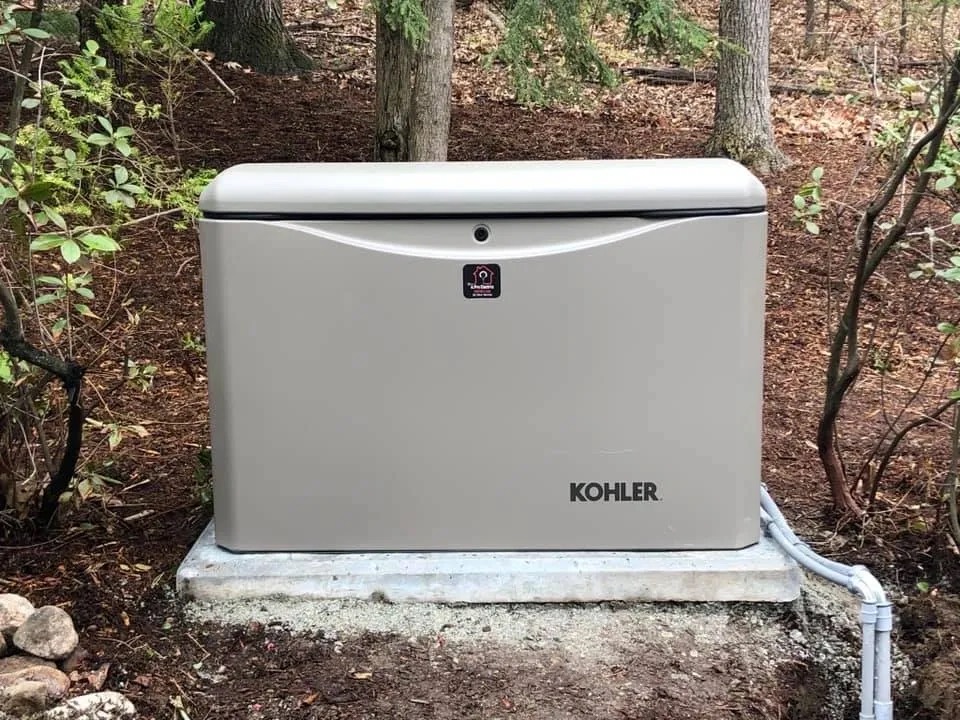
A portable is cheaper, gets wheeled out and started by hand, and needs fuel carried to it during the outage. A standby sits on a pad, runs off gas or propane, and starts itself when the power goes. If outages here are long and you are away sometimes, a standby is the one that actually gets used. If they are short and rare, a portable with a correctly installed inlet is often enough.
Can I Run the Whole House or Just Some of It?
Both are possible and they cost differently. A critical-loads panel feeds a chosen set of circuits, which is cheaper and lets a smaller unit do the job. Whole-house means the generator carries everything, which needs a bigger unit and usually load management so it can shed the heavy things when it needs to.
Does It Need a Transfer Switch?
Yes, always, and it is not optional. Backfeeding a house without one puts power onto the utility line and can kill the crew working to restore it. A transfer switch physically prevents the two sources from ever being connected at once, and it is what the inspector checks first.