

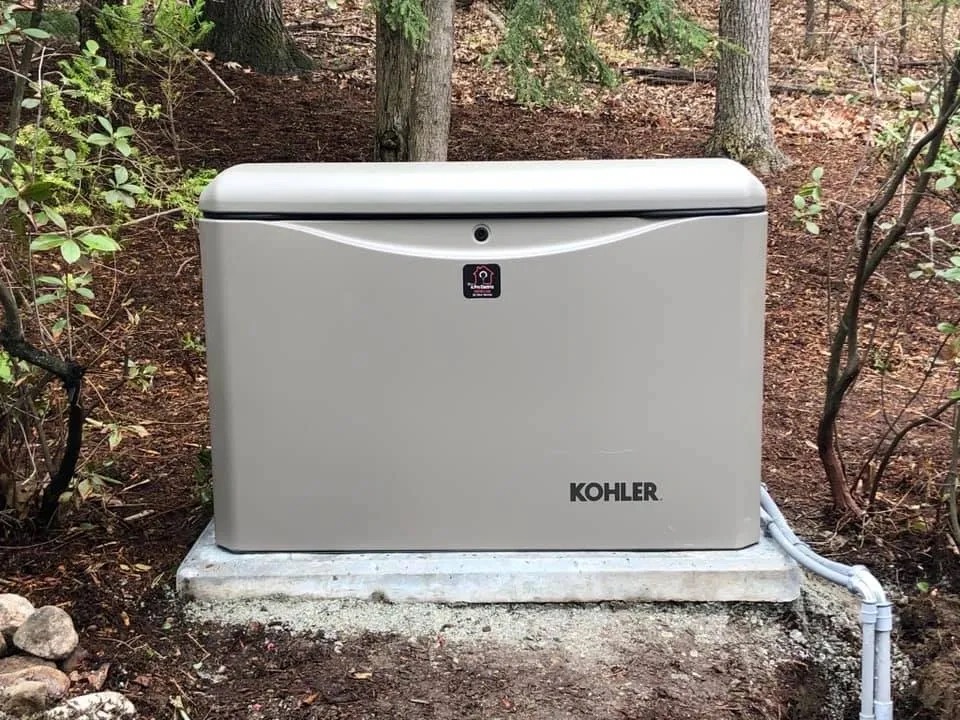
What Size Generator for a 300 Amp Service in NH, for Large and Electric Homes
What size generator for a 300 amp service in NH comes down to whether the house heats with electricity, because a 300 amp service usually means an all-electric or heat pump home, a large house or a house with a workshop, and the heating decides whether the generator is fifteen kilowatts or more than thirty.
Working Out the Generator Size for a 300 Amp Service in New Hampshire
What Size Generator a 300 Amp Service Needs, and the Question That Decides It
A 300 amp service at 240 volts can deliver up to 72,000 volt-amperes, an unusual size for an ordinary house and a common one for a large or all-electric home. Like every service rating it describes what the utility connection can carry, not what the generator should be. The generator is still sized from what you choose to run in an outage, and the list on a 300 amp house can be short or very long.
The single question that decides most of it is the heat. A large house that heats with oil, gas or propane has a small heating load on the generator, and its size is set by everything else on the list. A house that heats with a whole-house heat pump or electric resistance heat has a very large heating load, and the generator has to carry it or the house goes cold.
The examples that follow use the typical figures and the method in our generator sizing calculator. Most houses with 300 amp services sit between the single-panel house in what size generator for a 200 amp service and the multi-building property in what size generator for a 400 amp service, and which one a house resembles depends on how it is built.
How a 300 Amp Service Is Built and What It Means for the Generator
A 300 amp service is often not one 300 amp panel but a meter and service sized for 300 amps feeding two panels, perhaps a 200 amp main and a 100 amp panel for a wing, an addition or a garage. The split matters for the generator, because it decides where the transfer equipment goes and how much of the house it covers.
A whole-house transfer arrangement on a split service needs transfer equipment rated for the service it carries, which on a 300 amp service is a large and costly piece of equipment. A critical loads arrangement takes the chosen circuits from both panels into one backup panel, and the transfer equipment is sized for that panel alone. On a large house the second route often costs far less for the same practical result.
We draw the service out before we talk about generator size, with the meter, the panels and what each one feeds. On a 300 amp house that drawing usually shows that the loads worth keeping on in an outage are spread across both panels, and the critical loads panel is where they are gathered.
Generator Size for a 300 Amp All-Electric House With a Heat Pump
Take an all-electric house on a well with a whole-house heat pump in place of a furnace. On the typical figures, the refrigerator runs at 700 watts, the freezer at 500, the well pump at 1,000, the lights and outlets at 1,000, the internet at 300 and the heat pump at 4,500, with an electric water heater at 4,500, a range at 5,000, a dryer at 5,000 and a dishwasher at 1,200. The running load is 23,700 watts.
The heat pump is also the largest start, at 9,000 watts, far above the well pump. Adding it once gives a required size of 32,700 watts before the margin. That is a large standby generator, and it is the honest cost of running an all-electric house through an outage with every appliance available.
Very few households need all of that at once. The range, the dryer and the water heater are large loads that can take turns, and a load management arrangement lets them do so automatically. With the heat pump, the essentials and one large appliance at a time, the same house can run on a much smaller unit, and that choice is usually worth more than any other decision in the job.
Electric Resistance Heat and the Generator on a 300 Amp Service
About 11.1 percent of occupied homes in New Hampshire heat with electricity, according to the U.S. Census Bureau American Community Survey estimates for 2020 to 2024. Some of those are heat pump houses and some use electric baseboard or other resistance heat, which draws far more power for the same warmth and is a common reason a house has a large service.
Baseboard heat has no starting surge, but it is a large, steady load, and a house heated entirely by baseboard can ask more of a generator than everything else in it together. The sizing tool does not carry a typical figure for baseboard, because heaters vary so much by room and by house, so we total the actual heater wattages from the nameplates and the thermostat zones at the visit.
For these houses the useful question is which zones must stay warm. Keeping the living area and the plumbing above freezing is a very different load from keeping every room at its normal setting, and a generator sized for the first can be a fraction of one sized for the second. Load management can also hold back some zones while others recover.
Generator Size for a 300 Amp House With a Workshop and Mini-Splits
Other 300 amp houses are large because of what is attached to them, a heated garage, a workshop or a finished space over the garage. Those houses often heat with oil or propane, and their generator list is longer than a typical house's without being dominated by heat.
On the typical figures, the furnace runs at 800 watts, the refrigerator at 700, the freezer at 500, the well pump at 1,000, the lights and outlets at 1,000, the internet at 300, the garage door and workshop at 1,500, two mini-splits at 1,200 each and an electric water heater at 4,500. That is 12,700 watts of running load. The well pump is still the largest start at 3,000, ahead of the workshop at 2,500, so the required size is 15,700 watts.
That is less than half the all-electric example on the same size of service, and it shows why a 300 amp rating says so little about the generator. Whether the workshop needs to run in an outage is the obvious question to ask, because tools and compressors are often the easiest load to leave off.
Load Management on a 300 Amp House so a Smaller Generator Covers More
Load management is the tool that makes large houses practical on backup power. A load management module watches the generator's output and switches large appliances off for a few minutes when the generator nears its limit, then back on when there is room. The household keeps the use of everything, but not all at once.
On a 300 amp all-electric house it can cut the generator size dramatically. The range, the dryer and the water heater together add 14,500 watts on the typical figures, and they rarely need to run in the same minute. Managing them lets a generator sized for the heat pump and the essentials cover the whole house in practice.
Load management is set up as part of the transfer arrangement, and it works with both whole-house switches and critical loads panels. We cover how it is configured in Generac installation, where it is part of most of the larger systems we install.
Fuel Supply and Siting for a Larger Generator on a 300 Amp House
A larger generator needs a larger fuel supply. On natural gas, the line and the meter have to carry the generator alongside the furnace, the range and the water heater, and a large unit can need a larger meter or line, which the gas supplier and a licensed gas fitter decide. On propane, the tank has to hold enough to run the generator through the outage you are planning for, at the load you expect.
Ratings differ by fuel, and a large unit's natural gas rating can be several kilowatts below its propane rating. On a house sized close to the limit, the fuel can decide which unit is needed, so we read the size against the rating sheet for the fuel that will actually be used.
A large unit also needs room. It sits on a pad with clearances around it for air and service, away from windows and doors, in a position snow will not bury and at a distance from the panel that keeps the cable run sensible. On a large house with a split service, the position is chosen with both panels in mind.
EV Chargers, Hot Water and the Generator on a 300 Amp House
Large houses are where EV chargers arrive first, often two of them, and a 300 amp service is frequently the reason a house can carry them at all. On the generator they are a different matter. A charger at 48 amps and 240 volts draws 11,520 watts while it charges, and two of them would double the size of the generator on the shop house example by themselves.
The usual answer is to leave the chargers off the generator, or to put them under load management so they charge only when the house has room. A car parked through an outage rarely needs a full charge before the power is back, and if it does, a managed charger will top it up overnight when the heat pump and the appliances are quiet.
Hot water is the other large steady load. An electric water heater runs at 4,500 watts on the typical figures, and a large house may have two, or a heat pump water heater that draws less but runs longer. Hot water can usually wait a few hours in an outage, and holding the water heater back under load management is one of the simplest ways to keep a 300 amp house on a smaller unit.
None of these choices is permanent. Load management settings can be changed after the installation, and a household that finds it wants more on the generator in practice can adjust the priorities without changing the unit. Our guide to standby generators explained sets out what a generator covers and how the choices fit together.
What We Measure Before Quoting a Generator for a 300 Amp Service
On a 300 amp house the visit starts with the service drawing, the meter, each panel and what it feeds, then the heating system, which on these houses decides most of the answer. We read the heat pump or heater nameplates, the well pump, the water heater and the main appliances, and note any workshop or outbuilding loads.
We ask which parts of the house must stay usable in an outage, whether the large appliances can take turns and what is planned, such as an EV charger, which at 48 amps and 240 volts draws 11,520 watts and can change the answer on its own. Each answer moves a line on the list.
The result is a written scope with the generator size, the transfer arrangement, the load management settings, the fuel and the position, and it forms part of a full standby generator installation in NH. The installation is permitted, inspected and tested under load before we hand it over.
What size generator for a 300 amp service in NH is mostly a question about the heat and about load management. A. Pro Electric, a licensed master electrician working from Henniker, draws the service out, sizes the unit with and without load management and installs it.
What Generator Sizing for a 300 Amp Service Includes in Our Quote
- A drawing of the service, the meter and each panel and what it feeds
- Nameplate readings for the heat pump or heaters and the main appliances
- A written generator size, with and without load management
- A whole-house or critical loads arrangement across both panels
- Fuel supply and position settled for a larger unit
- Permit, inspection and a load test before we leave
Signs a 300 Amp House Needs Generator Sizing Before You Choose a Unit
- A whole-house heat pump or electric baseboard heat
- Two panels behind one service
- A workshop, heated garage or space over the garage
- An electric range, dryer and water heater you want available in an outage
- An EV charger installed or planned
Generator Size for a 300 Amp Service Questions, Answered
What Size Generator Do I Need for a 300 Amp Service?
It depends mostly on the heat. On the typical figures an all-electric heat pump house with every appliance available needs about 32,700 watts before the margin, while an oil-heated house with a workshop and mini-splits needs about 15,700. Load management can bring the first much lower.
Does a 300 Amp Service Need a 300 Amp Transfer Switch?
A whole-house arrangement needs transfer equipment rated for the service, which is large and costly at 300 amps. A critical loads panel gathers the chosen circuits from both panels and needs far smaller transfer equipment.
Can a Generator Run Electric Baseboard Heat?
Yes, if it is sized for it, but baseboard is a large steady load. We total the real heater wattages and usually recommend keeping the living area and the plumbing warm rather than every room.
What Is Load Management and Do I Need It?
A module that switches large appliances off for a few minutes when the generator nears its limit. On a 300 amp all-electric house it lets a much smaller generator cover the whole house in practice.
Should the Workshop Be on the Generator?
Usually not. Tools and compressors are easy loads to leave off in an outage, and leaving them off keeps the unit smaller.
Does the Fuel Change the Generator Size?
It can. A generator produces less on natural gas than on propane, so the size is read against the rating for the fuel you will use, which matters on a house sized close to the limit.
Should My EV Charger Be on the Generator?
Usually not. A charger at 48 amps and 240 volts draws 11,520 watts, more than many whole essential lists, and a parked car can normally wait until the power is back. Where it must charge, load management lets it run only when the house has room, so the generator does not have to be sized around it.
Do I Need a Permit for a Generator on a 300 Amp Service?
Yes. It is permitted and inspected work in New Hampshire. We pull the permit, attend the inspection and test the generator under load before we leave.
Guides on Generators & Backup Power
Standby Generators: What They Cover and What They Do Not
Whole-house against essential circuits, automatic against manual, and what a transfer switch is for.
Getting a Home Ready for a New Hampshire Winter
Outage backup, heat cables for ice dams and frozen pipes, winter heating load, and outdoor power before the snow.
More Generators & Backup Power
Portable Generator Hookup
Inlet, interlock and permit, so a generator you own can run the house safely.
Automatic Transfer Switch Installation
The switch that moves the house onto the generator, sized to the service.
Critical Loads Panel
The subpanel that decides which circuits stay live in an outage.
Generator Servicing & Load Testing
The annual visit, tested under real load, with a written record.
Generac Generator Installation
The brand we fit most often, sized to the house and commissioned under load.
Generator Replacement & Upgrades
Replacing a set that is past parts, past repair or too small for the house.
Standby Generator Sizing
How to size a standby generator from the circuits you keep on, for 100 to 300 amp service.
Generator Size for a 100 or 125 Amp Service
What size generator a small-service house or camp needs, and when the service should come first.
Generator Size for a 150 Amp Service
Wells, septic, central air and home offices, worked into a generator size.
Generator Size for a 200 Amp Service
What size generator a 200 amp house needs, worked from the circuits and not the service.
Generator Size for a 400 Amp Service
Sizing a generator for a large house, a second panel or a property with outbuildings.
All generators & backup power work, including what a full installation involves and what it costs.